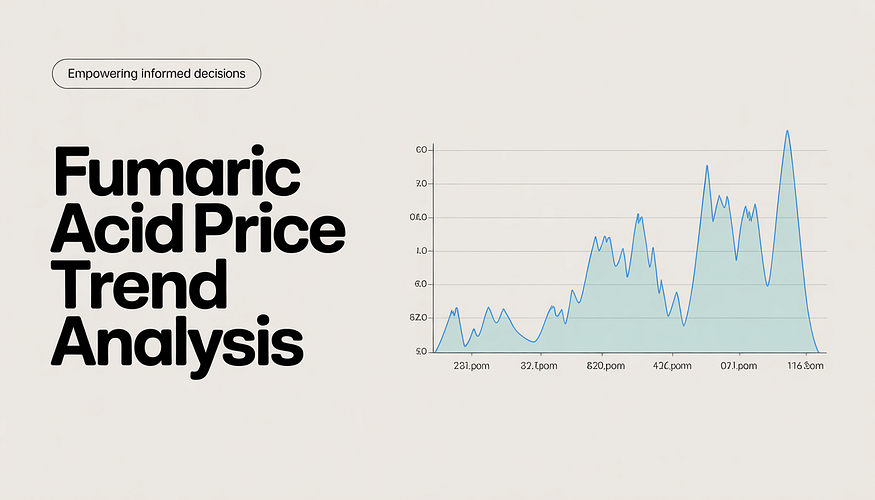
Fumaric acid is not a chemical most people talk about in daily life, but it quietly plays an important role in many products we use. It is widely used in food items, beverages, pharmaceuticals, and even in industrial applications like resins and coatings. Because of this wide usage, changes in the fumaric acid price trend matter to manufacturers, suppliers, and businesses that depend on steady raw material costs. To understand why prices move up or down, it helps to look at common market factors in a simple and practical way.
Press enter or click to view image in full size
The price trend of fumaric acid is closely linked to its raw material availability. Fumaric acid is generally produced from petrochemical-based feedstocks such as maleic anhydride. When crude oil prices rise, production costs usually increase as well. This higher cost often reflects directly in the fumaric acid price trend, making it more expensive for buyers. On the other hand, when oil prices stabilize or fall, manufacturers may find some relief in production expenses, which can help control price increases.
Another important influence on fumaric acid prices is demand from the food and beverage industry. Fumaric acid is commonly used as an acidulant because it provides a strong sour taste and has a longer shelf life compared to some alternatives. When processed food consumption increases, especially in urban areas, the demand for fumaric acid grows. This rising demand can push prices upward, particularly if supply does not expand at the same pace.
Supply chain conditions play a major role in shaping the fumaric acid price trend. Delays in transportation, shortages of containers, or disruptions at manufacturing plants can reduce the availability of the product in the market. When supply tightens, even temporarily, prices often react quickly. In contrast, smooth logistics and stable production schedules usually help keep prices balanced.
Press enter or click to view image in full size

Manufacturing capacity also matters. If producers invest in new plants or upgrade existing facilities, overall supply can increase. Over time, this can help moderate prices by reducing pressure on the market. However, such expansions require time and capital, so their impact on the fumaric acid price trend is usually gradual rather than immediate.
The fumaric acid price trend can vary from one region to another. In regions where raw materials are easily available and manufacturing infrastructure is strong, prices tend to be more competitive. For example, countries with well-established chemical industries may offer fumaric acid at relatively stable prices due to efficient production and distribution systems.
Press enter or click to view image in full size
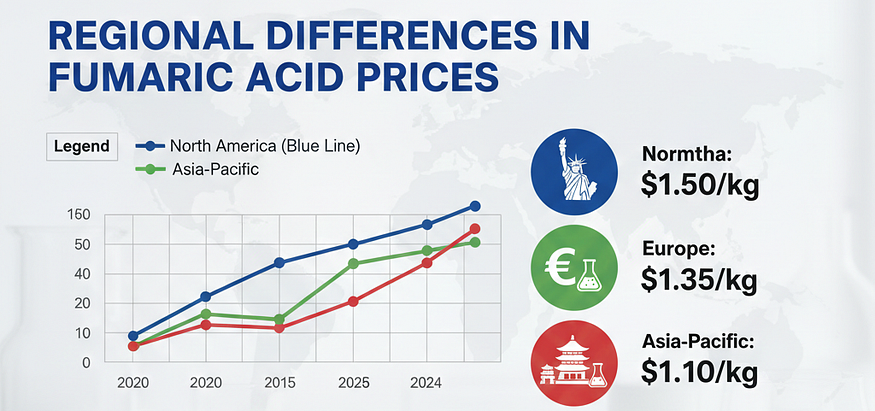
In contrast, regions that rely heavily on imports often experience more price fluctuations. Import duties, currency exchange rates, and shipping costs all add to the final price. If a local currency weakens against major trading currencies, imported fumaric acid becomes more expensive, influencing the overall market trend in that region.
Like many chemical products, fumaric acid demand can show seasonal patterns. In certain months, food and beverage production may increase, especially during festive or peak consumption periods. This seasonal rise in demand can temporarily push the fumaric acid price trend upward. During slower periods, prices may soften as demand eases and suppliers try to maintain sales volumes.
Long-term demand cycles also shape price behavior. Growing populations, changing food habits, and increased use of processed foods can steadily raise demand over the years. This long-term growth often supports a generally upward price trend unless matched by equal growth in production capacity.